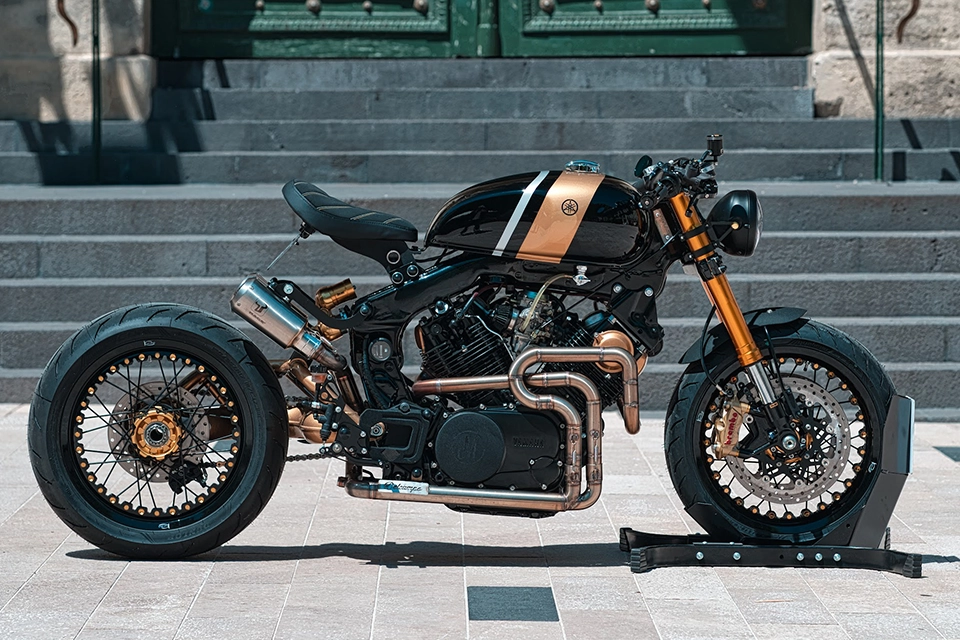
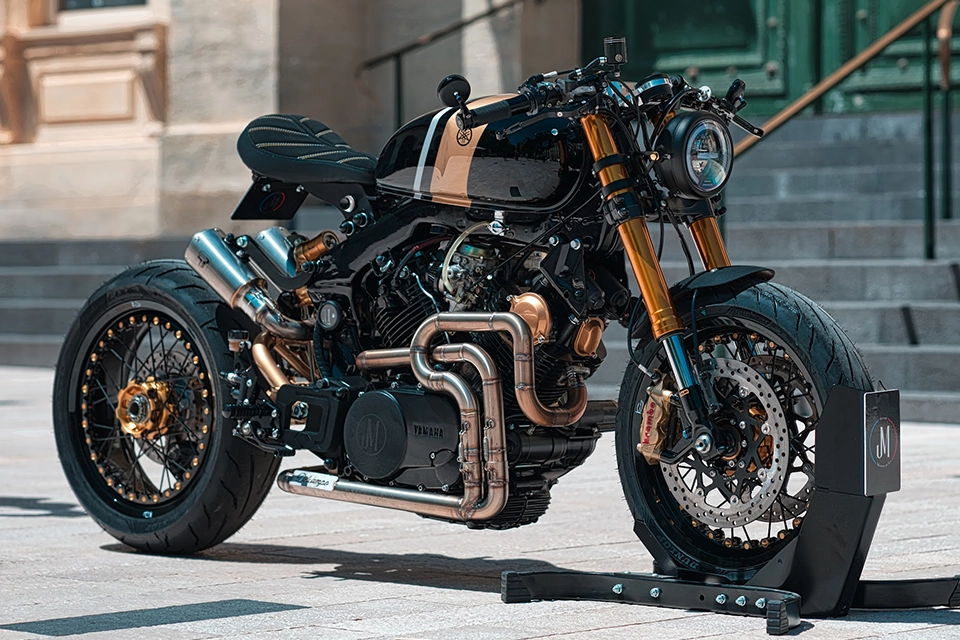
This 1982 Yamaha XV 1000 TR1 underwent a complete transformation by JeremMotorcycles. Acquired in its original configuration, the motorcycle was entirely disassembled to overhaul every component, from the chassis and engine to the bearings, bolts, electrical system, and finishing elements. The project goes beyond mere aesthetics. It combines components from several sport bikes with numerous custom-made parts. A Suzuki GSX-R fork, a Ducati S2R swingarm, Kineo wheels, Brembo brakes, and a Sachs shock absorber make up a thoroughly reworked chassis. The package is completed with a Royal Enfield fuel tank, a handcrafted seat, and an exhaust system manufactured in-house.
A Chassis Composed of Sporty Components
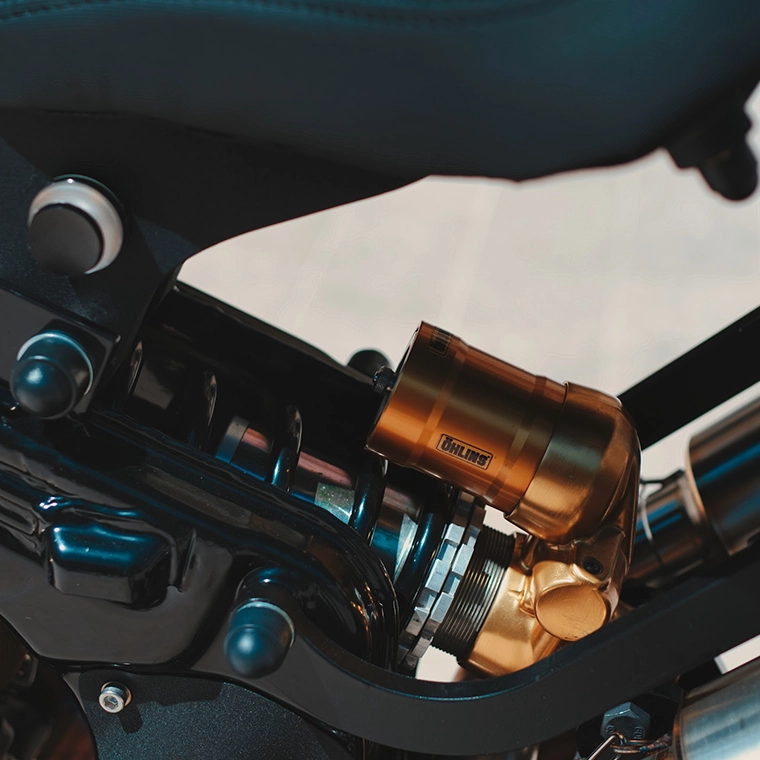
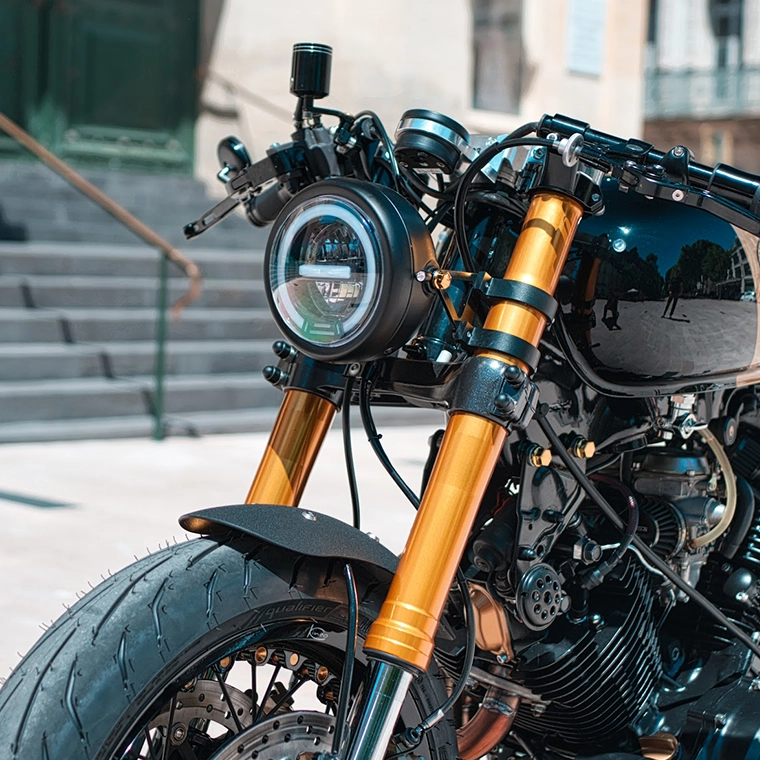
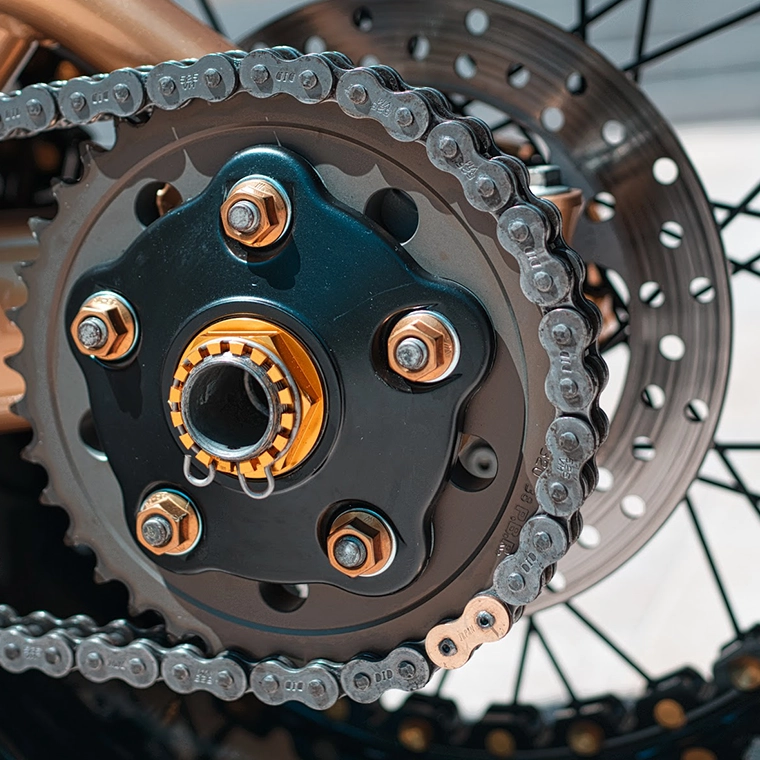
The original chassis has been largely replaced. At the front, the Yamaha receives a Suzuki GSX-R fork, completely rebuilt and then anodized with a gold finish. This upgrade alters both the motorcycle’s handling and its visual identity. At the rear, the customizer installed a swingarm from a Ducati S2R. This was refurbished before being adapted to the Yamaha frame. It is paired with a Sachs shock absorber from an MV Agusta 800. A CNC-machined aluminum spacer was specially created to allow for its installation. The original wheels have been replaced with custom-made Kineo rims. They are fitted with Dunlop tires, 120 at the front and 180 at the rear. This setup contributes to reinforcing the more contemporary and muscular look of the modified motorcycle. The overall package represents a major evolution compared to the standard configuration. However, the choice of modern sport components necessitates significant design, machining, and adjustment work to preserve the motorcycle’s geometry and overall coherence.
A Completely Overhauled Brembo Braking System
The braking system has also been modernized. The Brembo calipers were completely rebuilt before installation. They are controlled by a Nissin master cylinder and paired with Exact braided brake lines. This configuration logically complements the modifications made to the suspension, wheels, and tires. It allows the braking to be adapted to the performance expected from a significantly modified Yamaha XV 1000 TR1. Rearset footpegs have been fitted to the original footpegs, which were previously shortened and modified. This placement contributes to the improved riding position and the more sporty aesthetics of the model.
A rebuilt and dyno-tuned engine
The Yamaha’s twin-cylinder engine has been rebuilt and overhauled with the aim of improving its reliability. The modifications are therefore not solely cosmetic: the mechanics have also undergone a thorough overhaul. The final engine tuning was entrusted to Thorn Bike, who performed the adjustments on a dyno. This process allows the engine’s operation to be adapted to the modifications made to the intake and exhaust systems. The original air filters have been replaced with velocity stacks. This new intake system works with a completely custom-made exhaust system, crafted in the JeremMotorcycles workshop with the participation of Thibault. It terminates with Ixrace tailpipes. The combination of velocity stacks, a custom exhaust, and rebuilt carburetors requires precise carburetor tuning. Dyno testing is therefore a crucial step to ensure balanced and usable performance.
Integrated Instrumentation in the Triple Clamp
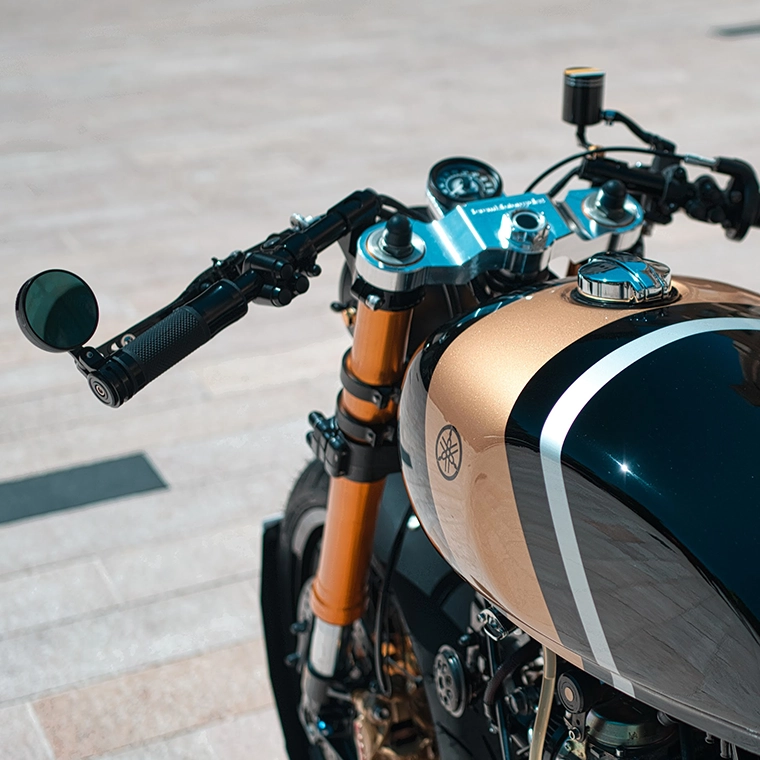
The cockpit has been streamlined to maintain the cleanest possible lines. A Daytona speedometer has been integrated directly into the upper triple clamp. This custom part was crafted by USV Racing. This placement minimizes the clutter of visible components around the handlebars and contributes to the overall aesthetic of the motorcycle. The front switchgear is made of CNC-machined aluminum. It operates with an M-Unit electronic module, which centralizes and simplifies part of the electrical system. The Solise lithium battery, voltage regulator, and M-Unit are housed under the fuel tank. This configuration visually declutters the area under the seat and preserves the minimalist look desired by the customizer.
Modern and Discreetly Integrated Lighting
The Yamaha features an LED headlight, mini turn signals at the front, and an LED taillight with sequential turn signals. At the rear, the various lighting elements are grouped on a custom-made aluminum bracket. The integration of these components contributes to simplifying the overall silhouette. The contemporary electrical components are thus present without dominating the motorcycle’s lines. The use of a wiring harness organized around the M-Unit also facilitates the management of electrical functions. This solution is frequently chosen for highly customized builds, where the original wiring harness becomes difficult to integrate with the new equipment and its placement.
A Royal Enfield Tank and a Custom Seat
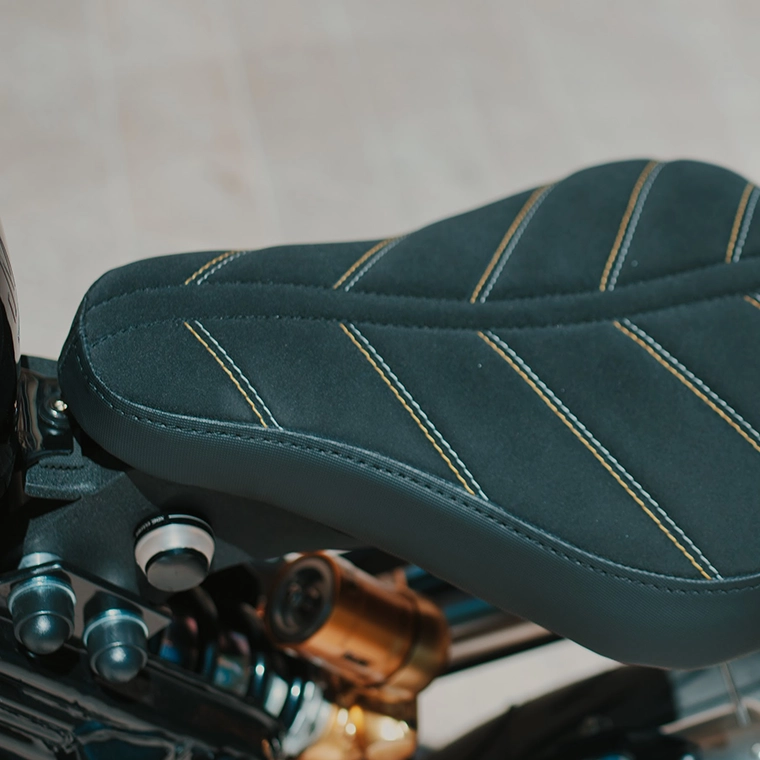
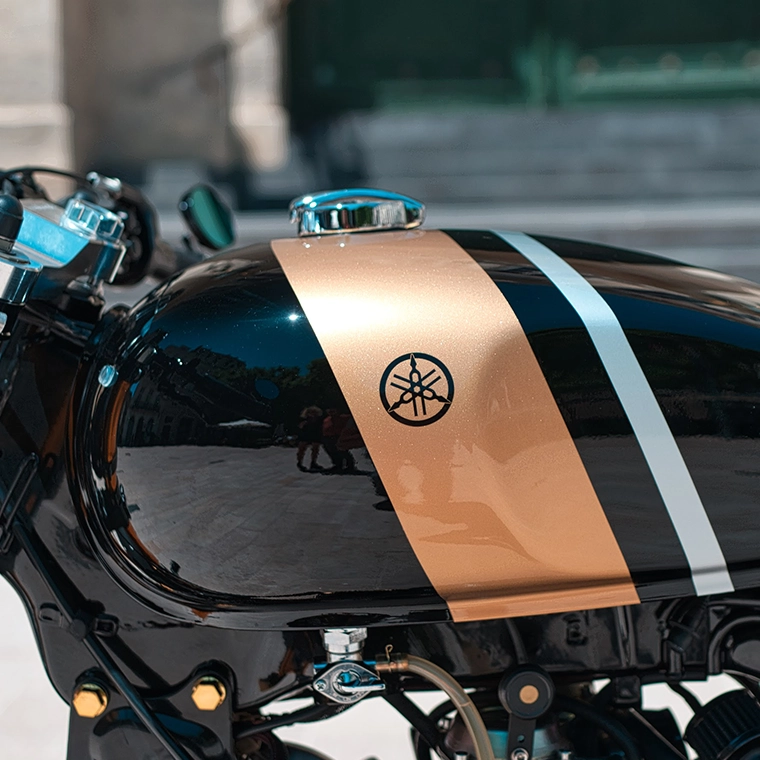
The TR1’s original tank has been replaced with one from a Royal Enfield. This adaptation significantly alters the motorcycle’s topline and contributes to the pursuit of more compact proportions. The seat rests on custom-made aluminum brackets. Its fabrication was entrusted to the Yaya Brush Sellerie workshop, which developed a part adapted to the new rear subframe and the overall aesthetics of the custom build. The interplay between the tank, the seat, and the redesigned rear section gives the Yamaha a new identity. These components are not simply added to the motorcycle: they require precise adaptation of the supports, volumes, and mounting points.
A Custom Build Built Around Bespoke Design
This Yamaha XV 1000 TR1 is characterized by the importance of its specific parts. The installation of a GSX-R fork, a Ducati swingarm, Kineo wheels, and an MV Agusta shock absorber involves numerous operations that are invisible once the motorcycle is finished. Spacers, brackets, shims, fasteners, and plates must be designed or modified to allow for assembly. The rear light bracket, speedometer integration, seat mounts, shock absorber shim, and exhaust system exemplify this approach. According to JeremMotorcycles, approximately 300 hours of work were required to complete the project. This timeframe includes disassembly, component restoration, frame modifications, adaptation of various parts, fabrication of custom components, reassembly, and final adjustments.
A TR1 Deeply Transformed Without Obscuring Its Mechanical Foundation
Despite the extensive modifications, the build retains the twin-cylinder engine and overall architecture that define the Yamaha TR1. The project relies on a contrast between this classic engine and more modern chassis components. The gloss black frame finish, gold anodized forks, custom wheels, and machined aluminum components give the motorcycle a technical appearance. The Royal Enfield tank and handcrafted seat lend a more classic feel, while LED lighting and centralized electronics update its equipment. This Yamaha XV 1000 TR1, customized by JeremMotorcycles, is thus a completely personalized creation, built around a methodical rebuild and extensive adaptation work. More than just an aesthetic transformation, it combines overhauled mechanics, a modernized chassis, handcrafted components, and contemporary technical solutions.
Yamaha XV 1000 TR1 Preparation Sheet - JeremMotorcycles
Model: Yamaha XV 1000 TR1
Year: 1982
Builder: JeremMotorcycles
Frame: Modified, sandblasted, and powder-coated in gloss black
Forks: Rebuilt and gold anodized Suzuki GSX-R
Swingarm: Refurbished Ducati S2R
Shock Absorber: Sachs from an MV Agusta 800 with a custom CNC spacer